
Japchae
If you’re looking for a delicious and comforting dish that brings together vibrant flavors and wholesome ingredients, then Japchae is your answer! This beloved Korean recipe has a special place in my heart. It’s perfect for everything from busy weeknights to festive family gatherings. The chewy texture of sweet potato glass noodles combined with fresh veggies and savory seasonings makes every bite a delight. Plus, it’s easy to customize based on what you have at home or your family’s preferences.
Whether you’re making it for a cozy dinner or to impress friends, Japchae is sure to bring smiles all around. Let me share my favorite way to prepare this flavorful dish!
Why You’ll Love This Recipe
- Quick and Easy: With just a few steps, you can whip up this tasty meal in under an hour!
- Family-Friendly: Kids and adults alike will enjoy the chewy noodles and colorful veggies.
- Make Ahead: Japchae stores well in the fridge, so you can enjoy leftovers or meal prep for the week.
- Customizable: Feel free to swap proteins or add extra veggies based on your taste.
- Deliciously Balanced: The combination of sweet and savory flavors makes it irresistibly good!
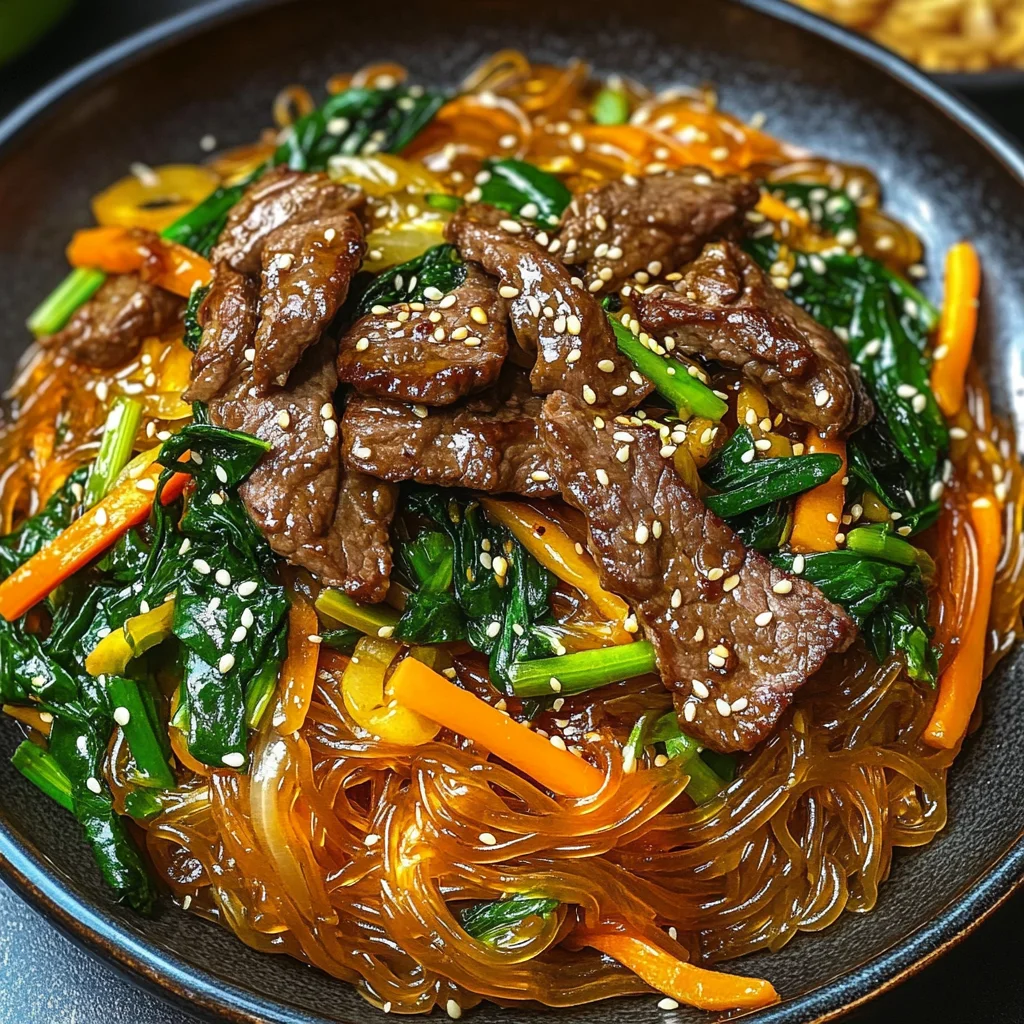
Ingredients You’ll Need
Let’s gather some simple, wholesome ingredients that come together beautifully in this dish. You’ll find everything you need at your local grocery store!
For the Main Dish
- 2 lb thin-sliced beef (or sub with chicken, tofu, or shrimp)
- 1 lb Korean sweet potato noodles (glass noodles)
- 3 medium carrots, julienned
- 1 large white onion, thinly sliced
- 1/2 bunch green onions, chopped
- 6 garlic cloves, minced
- 1/2 lb spinach leaves
For the Sauce
- 4 tbsp sesame oil (divided)
- 1 tbsp olive oil
- 6 tbsp soy sauce (or tamari for gluten-free)
- 3 tbsp brown sugar
Variations
One of the best things about Japchae is its flexibility. You can easily adapt the recipe to fit your taste preferences or dietary needs!
- Swap the protein: Use chicken, tofu, or shrimp instead of beef for a different flavor profile.
- Add more veggies: Toss in bell peppers or mushrooms for added nutrition and color.
- Spice it up: Add a spoonful of gochujang for a spicy kick that complements the sweetness.
- Make it vegan: Simply omit the meat and use tofu as your protein source for a hearty plant-based option.
How to Make Japchae
Step 1: Cook the Noodles
Start by bringing water to a boil in a large pot with a drizzle of olive oil. Adding oil prevents the noodles from sticking together. Once boiling, add the sweet potato noodles and cook them for about 5-6 minutes until they are tender but still have a nice chew. Drain them well and set aside; this is what gives Japchae its signature texture!
Step 2: Prepare the Beef
In a skillet over high heat, cook the thin-sliced beef until it’s browned. Season it with half of the soy sauce, sesame oil, and brown sugar while cooking. This step adds depth of flavor to the beef and ensures it’s juicy. Once cooked through, set it aside.
Step 3: Sauté the Vegetables
In another skillet, heat olive oil over medium-high heat. Add your julienned carrots and sliced onion first; cooking until softened enhances their sweetness. After that, mix in the remaining soy sauce, sesame oil, and brown sugar along with minced garlic and chopped green onions. Cooking these ingredients together creates an aromatic base full of flavor.
Step 4: Add Spinach
Next up is adding spinach leaves to your sautéed veggies! Stir them until they wilt down—this not only adds color but also packs in nutrients without overpowering other flavors.
Step 5: Combine Everything
Now it’s time to bring everything together! In a large bowl, toss together your cooked noodles, sautéed vegetables, and seasoned beef until everything is well combined. This step ensures that each noodle is coated with all those delicious flavors.
Step 6: Serve Up!
Serve your Japchae warm! If you like, garnish with extra green onions for an added fresh touch. Enjoy this delightful dish with family or friends—it’s sure to be a hit!
Pro Tips for Making Japchae
Making Japchae at home is a delightful experience, and with these tips, you’ll be able to elevate your dish to the next level!
-
Use high heat: Cooking on high heat helps to achieve that perfect stir-fried texture, ensuring the noodles and vegetables are cooked quickly while retaining their vibrant colors and crunch.
-
Prep ingredients in advance: Having all your vegetables sliced and ready before you start cooking will make the process smoother and more enjoyable, allowing you to focus on the fun of stir-frying.
-
Customize your protein: Feel free to swap out beef for chicken, tofu, or shrimp based on your dietary preferences or what you have on hand. Each option offers a unique flavor that complements the noodles beautifully.
-
Don’t skip the sesame oil: This ingredient adds a distinct nutty flavor that is essential for authentic Japchae. It enhances the overall taste and aroma of the dish, making every bite irresistible.
-
Adjust sweetness to taste: The balance of soy sauce and brown sugar can be tailored to your liking. If you prefer a sweeter dish, add a touch more sugar; for a saltier flavor, increase the soy sauce slightly.
How to Serve Japchae
Presenting Japchae beautifully can make your meal even more enjoyable! Here are some ideas for serving this delicious Korean dish.
Garnishes
- Chopped fresh cilantro: Adds a bright, herbal note that contrasts nicely with the savory flavors of Japchae.
- Sesame seeds: A sprinkle of toasted sesame seeds provides a delightful crunch and enhances the nutty flavor profile.
- Extra green onions: Adding more chopped green onions on top not only looks appealing but also gives a fresh finish to each serving.
Side Dishes
- Kimchi: This traditional fermented vegetable side dish adds a spicy tang that perfectly balances the sweetness of Japchae.
- Korean pickled radish (Mu): These crisp, sweet-and-sour radishes offer a refreshing palate cleanser alongside your savory main dish.
- Cucumber salad (Oi Muchim): A light salad made with thinly sliced cucumbers tossed in vinegar and sesame oil brings crunch and acidity that complements Japchae beautifully.
- Steamed broccoli or bok choy: Simple steamed greens add color and nutrients while remaining neutral enough not to overpower the main flavors of the dish.
With these tips and serving suggestions, you’ll create an unforgettable Japchae experience that delights both family and friends alike. Enjoy!
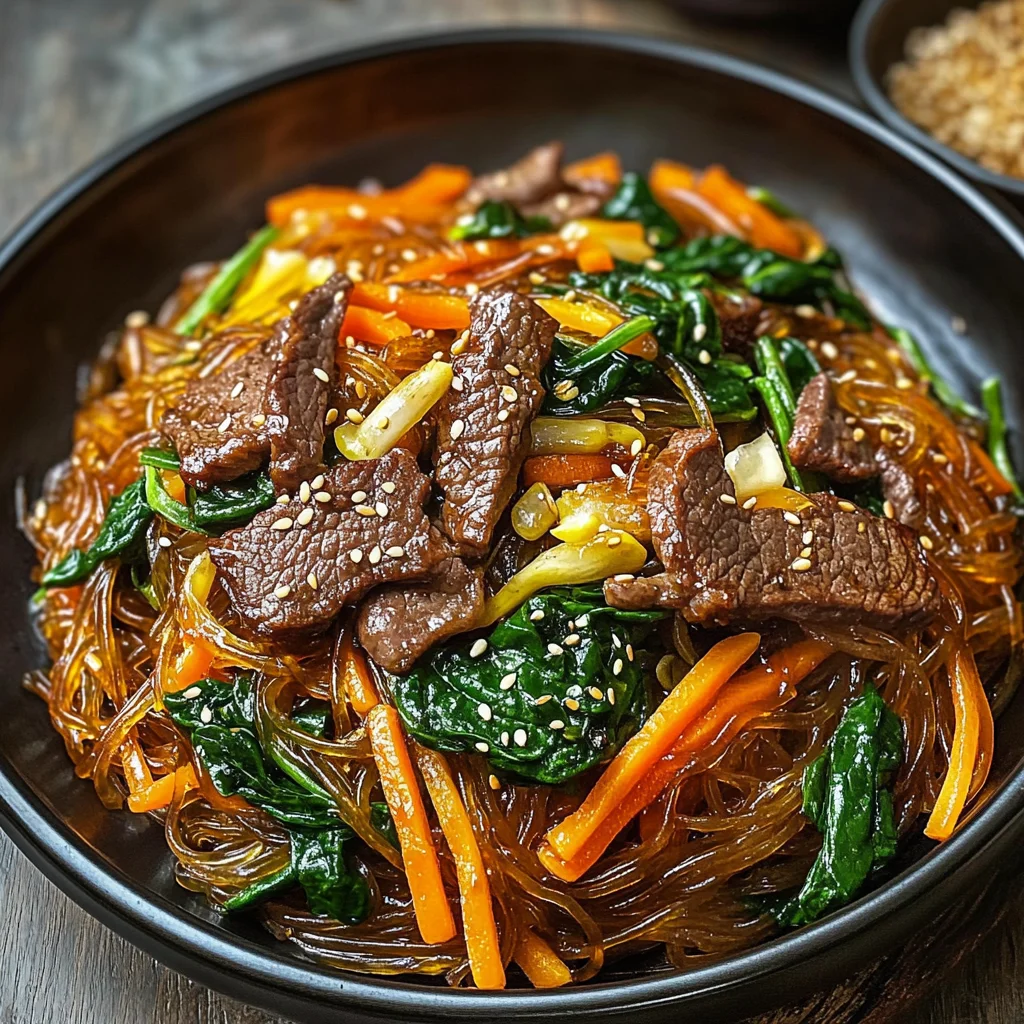
Make Ahead and Storage
Japchae is a fantastic dish for meal prep, allowing you to enjoy delicious flavors throughout the week without the hassle of daily cooking. The noodles and vegetables hold up well when stored, making it easy to have a wholesome meal ready at your fingertips.
Storing Leftovers
- Allow Japchae to cool completely before storing.
- Transfer leftovers to an airtight container.
- Store in the refrigerator for up to 3-4 days.
Freezing
- Portion out the Japchae into freezer-safe containers or bags.
- Squeeze out excess air and seal tightly.
- Freeze for up to 2 months. Note: The texture may change slightly upon thawing.
Reheating
- Thaw frozen Japchae in the refrigerator overnight or use the microwave’s defrost setting.
- Reheat on the stove over medium heat, adding a splash of water or additional sesame oil to prevent sticking.
- Stir occasionally until heated through, about 5-7 minutes.
FAQs
Here are some common questions you might have about making Japchae.
What type of noodles are used in Japchae?
Japchae is traditionally made with Korean sweet potato glass noodles, which provide a unique chewy texture that sets this dish apart from others.
Can I make Japchae vegan?
Absolutely! You can substitute beef with tofu or mushrooms and omit any animal products while including plenty of vibrant vegetables.
How do I customize my Japchae?
Feel free to add your favorite vegetables or proteins such as chicken, shrimp, or even spicy elements like gochujang for an extra kick!
Is Japchae healthy?
Yes! Japchae is packed with nutrient-rich vegetables and provides a great source of carbohydrates from sweet potato noodles, making it a balanced meal option.
Final Thoughts
Thank you for exploring this delightful recipe for Japchae with me! This dish is not only comforting but also incredibly versatile, allowing you to make it your own. I hope you enjoy preparing it as much as I do; each bite promises warmth and satisfaction. Happy cooking, and don’t hesitate to share your own variations or experiences!
Japchae

If you’re craving a comforting dish that bursts with vibrant flavors, Japchae is the perfect choice! This beloved Korean stir-fry features chewy sweet potato glass noodles tossed with an array of fresh vegetables and savory seasonings. Whether you’re preparing it for a cozy weeknight dinner or a festive gathering, this dish is easy to customize based on your family’s preferences. With its balance of sweet and savory notes, every bite promises satisfaction. Plus, it’s simple to make ahead for meal prep, allowing you to enjoy this delicious dish throughout the week!
- Prep Time: 15 minutes
- Cook Time: 25 minutes
- Total Time: 40 minutes
- Yield: Serves approximately 6
- Category: Main
- Method: Stir-frying
- Cuisine: Korean
Ingredients
- 2 lb thin-sliced beef (or substitute with chicken, tofu, or shrimp)
- 1 lb Korean sweet potato noodles (glass noodles)
- 3 medium carrots, julienned
- 1 large white onion, thinly sliced
- 1/2 bunch green onions, chopped
- 6 garlic cloves, minced
- 1/2 lb spinach leaves
- 4 tbsp sesame oil
- 1 tbsp olive oil
- 6 tbsp soy sauce (or tamari for gluten-free)
- 3 tbsp brown sugar
Instructions
- Cook the glass noodles in boiling water for about 5-6 minutes until tender. Drain and set aside.
- In a skillet over high heat, cook the beef (or chosen protein) until browned. Season with half of the soy sauce, sesame oil, and brown sugar.
- In another skillet, sauté carrots and onion in olive oil until softened. Add remaining soy sauce, sesame oil, garlic, and green onions.
- Stir in spinach leaves until wilted.
- Combine cooked noodles with sautéed veggies and seasoned protein in a large bowl.
- Serve warm garnished with additional green onions if desired.
Nutrition
- Serving Size: 1 cup (approximately 200g)
- Calories: 360
- Sugar: 8g
- Sodium: 700mg
- Fat: 15g
- Saturated Fat: 3g
- Unsaturated Fat: 10g
- Trans Fat: 0g
- Carbohydrates: 45g
- Fiber: 4g
- Protein: 20g
- Cholesterol: 60mg